Showing posts with label indian. Show all posts

WOYP Day # 54 Shahi Aloo Gobi with Jeera Rice


I was at a Farmers Market last week and stocked  up on a bunch of fresh fruits and vegetables. This place is almost an hour's drive so I don't get to go there often. I had work in the area and made a quick detour :) What was supposed to be a quick stop turned into a 2-hour shopping spree :D I bought a bunch of colored bell peppers too, more of the red since I love how they make any dish vibrant. The beets went into making these gorgeous cutlets. We've been gorging on various fruit too ever since - Fresh figs, Plums, Raspberries, Strawberries, Grapes, luscious giant Mangoes that are super sweet, Pineapple, Watermelon (which I'm yet to cut) and all the fresh veggies. 


Made a quick and easy indulgent curry using Cauliflower, Potatoes, Peas and Red bell pepper. I say indulgent, since it is calorie rich but also laden with veggies, so i think it's alright to indulge every now and then :D 


Shahi Aloo Gobi
You will need:

1 cup Cauliflower, cut into florets
1/2 cup Potato, cubed
1/2 cup Red bell pepper, cubed
1/2 cup Green peas, fresh or frozen
1/2 cup Onion, cubed
2 tbsp Butter
1/2 tsp Cumin seeds
2 tsp Ginger Garlic paste
1/4 tsp Turmeric
1 cup Tomato Puree
1 tbsp Coriander powder
2 tsp Cumin powder
1 tsp Kashmiri Red chili powder
1 tsp Kasuthi methi
3 tbsp Cashewnut paste
2 tbsp Heavy whipping cream
Salt to taste

Boil the potatoes, cauliflower and peas until cooked but not mushy. Drain and set aside.

Heat butter in a pan. Add the cumin seeds. Add the onions and sauté until soft. Add the ginger garlic paste and turmeric. Cook until fragrant. Add Now add the tomato purée, turmeric, coriander powder, cumin powder, Kashmiri red chili powder and salt to taste. Combine and cook for 5-6 minutes. Add 1/2 cup water, the boiled veggies, red bell pepper and kasuthi methi. Combine, cover and simmer for another 4 minutes. Stir in the cashew paste and the cream. Cook for a minute and turn off heat. This will thicken the gravy and make it creamy and delicious! 


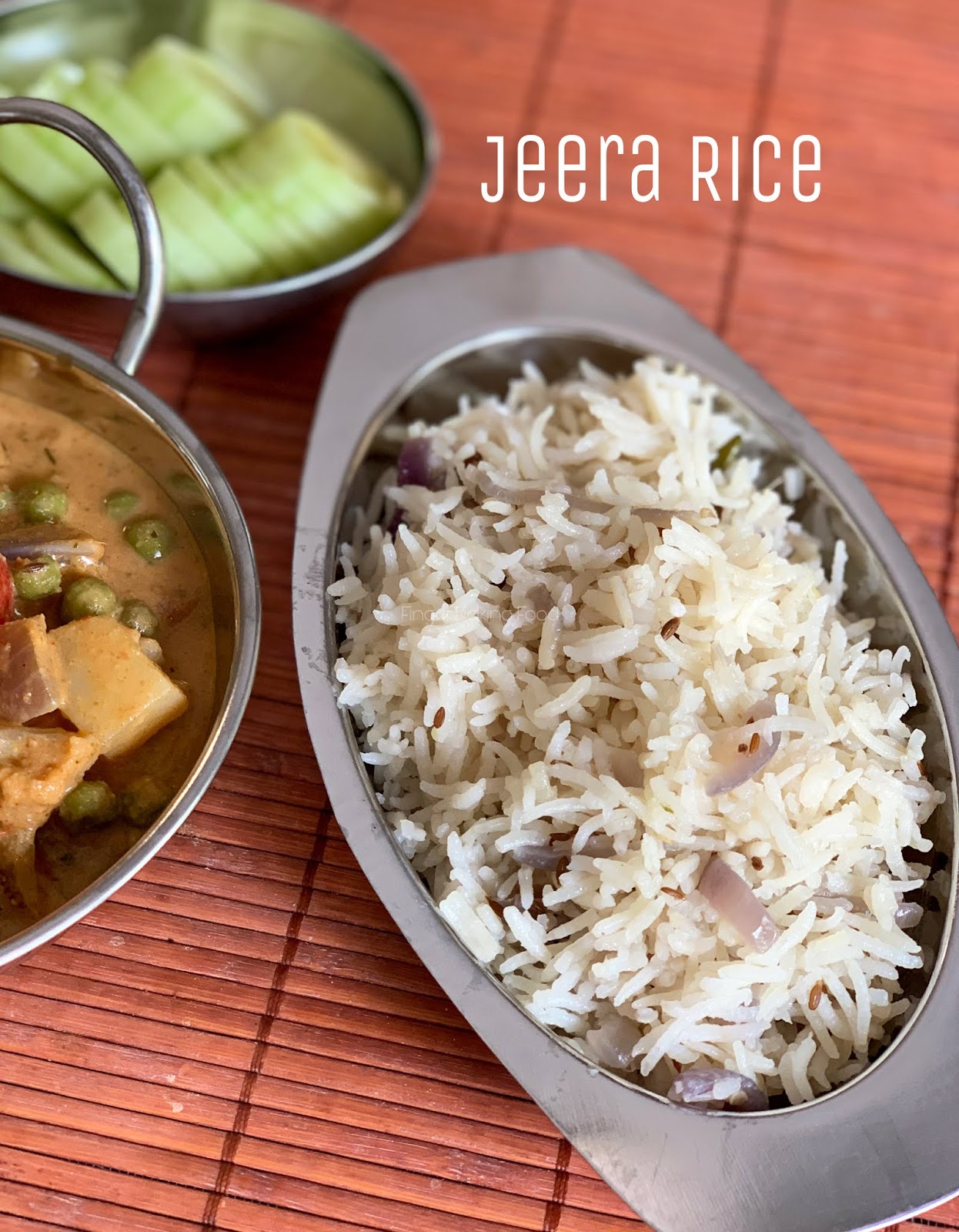
Shahi Aloo Gobi goes well with Jeera Rice or Chapatis/Rotis.

Jeera Rice:

Traditionally Jeera rice is long grained rice cooked with cumin seeds and little salt. I make it with onions, green chilies and ginger garlic paste to elevate the flavors. 

You will need:

1 cup Basmati rice
1.5 cups Water
2 tbsp oil
1 tsp Cumin seeds
3 Green Chillies, slit
1/2 Onion thinly sliced
2 tsp Ginger Garlic Paste

Wash the basmati rice until the water runs clear. Soak in water for 30 minutes.

Heat oil in a pressure cooker. Add the cumin seeds. Saute for few seconds and then add the green chillies and ginger garlic paste. Add the sliced onions and cook until soft. Drain the soaked rice and add it with the measured quantity of water. Season with salt to taste. Stir and raise the heat to high. Close the cooker lid and allow the steam to rise. Place weight on the cooker lid and lower heat to low. Cook for 10 minutes and turn off heat. Rest for 5-6 minutes before opening the lid. Stir rice gently to combine and then serve. This method of cooking ensures perfectly cooked fluffy rice.

WOYP Day # 52 Paneer Tikka (in oven)


Paneer Tikka is a popular appetizer in Indian restaurants, often made in a large Tandoor, which is traditionally a clay oven.  A Tandoor has very high temperatures going up to almost 900 F. The intense heat, comes from a coal fire which is at the bottom. This heats the wall and insides of the oven, allowing food to cook evenly and faster too. An array of foods are cooked in the Tandoor - indian breads like Naan, Roti, a variety of tikkas including Paneer and veggies and a large variety of meats. The clay oven and coal impart a signature smoky flavor to foods cooked in the Tandoor. 

Paneer Tikka cooked in the Tandoor is done using long metal skewers. Cooking in a Tandoor is an art in itself and often there is an assigned chef or cook who is solely responsible for handling Tandoor dishes in restaurants. 

To recreate the same dish at home, neither do we have ovens that go up to 900 F nor is it feasible to have a coal fire all the time (unless you have an outdoor coal grill). So the closest in taste is baking the Paneer and veggies first and then broiling them to give them a char. 


Paneer Tikka:
You will need:

200 gms Paneer, cut into large cubes
Oil 2-3 tbsp
1/2 cup cubed Green bell pepper
1/2 cup cubed Red bell pepper
1/2 cup cubed Yellow bell pepper
1/2 cup cubed Onion

1 tsp Chaat masala
Mint chutney
Thinly sliced onions to serve

Marinade:

1/2 cup Plain yoghurt
1 tbsp Coriander powder
2 tsp Cumin powder
1 tsp Red chili powder
1/2 tsp Chaat masala
1/4 tsp Turmeric
3/4 tsp Salt
1/2 tsp Kasuthi Methi (crushed)

Wooden or Metal Skewers
Foil lined baking sheet

In a medium bowl whisk together the marinade ingredients. Add the cubed paneer, bell pepper and onion. Combine well to coat evenly. Set aside for 2-3 hours or for at least an hour.

Preheat oven to 425 F.

Lightly oil a foil lined baking sheet. Skewer the paneer, bell pepper and onions alternately on the wooden or metal skewer. Place on the oiled baking sheet. Brush more oil on the paneer and veggies. 


Bake for 6 minutes and then place under broiler for 2-3 minutes. This will char the veggies and Paneer. 


Remove from the oven and rest for 3-4 minutes before lifting the skewers off the pan. If you try to remove them right out of the oven the Paneer will rip off the skewer. 


Gently slide veggies and Paneer off the skewers. Sprinkle chaat masala on top and serve with Mint chutney and thinly sliced onions. 


 Savor the soft & spicy Paneer with the crunchy broiled veggies. Yum! :)

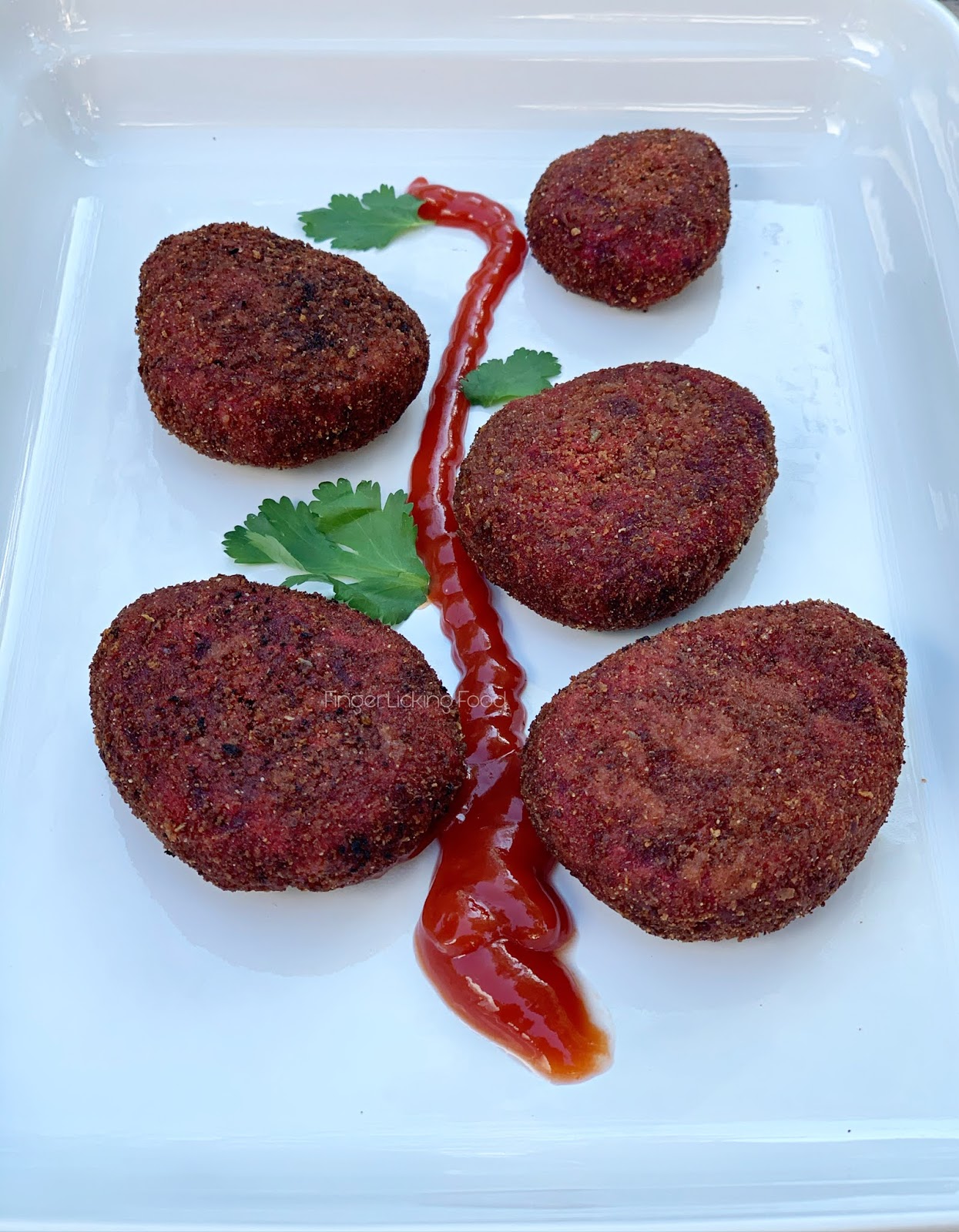
WOYP Day # 50 Beetroot Cutlets


Beetroot or Beets, are a popular root vegetable and used in many cuisines around the world. They are packed with essential vitamins, minerals and plant compounds, some of which have medicinal properties. Beetroot contains the Betalain pigment which is responsible for the deep red color. This color, vibrant and beautiful as it looks, can stain skin and clothes, so handle Beets with care. 


Beetroot Cutlets: 
You will need:

1 medium sized Beetroot
2 medium sized Potatoes
2 tsp Coriander powder
1 tsp Chili powder
1 tsp Chaat masala
1 tsp Garam masala powder
1/2 tsp Amchur powder (Dry mango powder)
2 tsp Ginger Garlic paste
Salt to taste
2 tbsp Corn starch

To coat:
2 tbsp Corn starch (mix with water to make a slurry)
Plain breadcrumbs

Oil to deep fry 

 
Boil the beetroot and potatoes separately. Peel and grate them into a large bowl. Add the coriander powder, chili powder, Chaat masala, Garam masala and salt to taste. Also add the corn starch and Ginger garlic paste and combine well. 


The mixture should be firm and hold shape. If it feels soft or sticky, add more corn starch as needed. Form into tear drop shaped patties. 


Heat oil in a deep pan and set it to medium high heat. Dip each patty into the corn starch slurry and then into the bread crumbs. 


 Turn to coat evenly and then drop into the hot oil. Fry on both sides until crisp. Drain excess oil and remove onto a paper towel lined plate. 

 
Alternately, you can shallow fry the cutlets in batches in a wide pan.

Serve hot with ketchup or Mint chutney. 


WOYP Day # 49 Moong Dal Parathas


Yellow Moong is Whole Green Moong that is split and skinned. When cooked it has a mellow, creamy taste. Yellow Moong dal can be used to make Spinach Dal, Moong Dal Payasa and even a traditional South Indian side dish made with soaked moong dal - Kosambari . I made a paratha filling with the versatile Moong for these Moong Dal Parathas. 


Moong Dal Parathas:
You will need:

For the Moong filling:

1 cup Yellow Moong
2 tbsp Oil
1/2 tsp Cumin seeds
1/2 cup onion, finely chopped
2 tsp Ginger Garlic Paste
1 tbsp Coriander powder
2 tsp Cumin powder
2 tsp Kashmiri Red chilli powder
1 tsp Red chili powder
Salt to taste
2 tbsp Chopped Cilantro


For the dough:

2 cups Whole wheat flour
1 tsp Salt
1 tbsp Oil
Warm water as needed

Make the dough:

Combine the wheat flour, salt and oil in a medium bowl. Slowly add warm water as needed to make a slightly soft dough. Knead for few minutes. Cover and rest for 15-20 minutes. Meanwhile prepare the filling.

Make the Filling:

Dry roast the moong in a pan until light brown and fragrant. Remove from pan immediately since it continues to brown in the pan and burnt moong doesn’t taste good! 


Pressure cook the moong for 2-3 whistles and allow to cook. If cooking on stove top use enough water and cook until moong is soft. Drain the water.

Heat oil in a pan. Add the cumin seeds once the oil is hot and then add the chopped onions. Sauté until soft. Add the Ginger garlic paste. Cook for a few seconds until fragrant. Now add the spice powders - coriander, cumin and both the red chili powders. Add salt to taste and cook well. Cook for 2-3 minutes on medium until the spices are fragrant. Now add the drained moong dal and combine. Cook until the moong dal mixture is slightly dry and can be rolled into a ball. Add chopped cilantro and combine. Turn off heat and cool the filling before using.

Method to make the Parathas:

Knead the rested dough for few minutes until soft and smooth. Divide into 10-12 equal balls. Make small balls of the cooled filling.

Flatten a ball of dough and using your thumb and fingers form a cup. Place a ball of filling in the cup and gather the dough around the filling and seal on top. Remove any excess dough. 


Dredge the ball in wheat flour and roll gently into a thick disc using a rolling pin. Take care to roll gently and with even pressure so that the filling spreads evenly. Parathas are usually thick but I prefer to make them a little thinner, but definitely thicker than Chapatis.

Heat a pan on medium heat. Roast one side for 1 minute, apply little butter and then flip to cook the other side until lightly browned. 


Remove from heat and serve hot with Raita and Pickle. 


These Moong Dal parathas are great for lunch boxes or to carry on a picnic, they remain soft and taste good even when cold.

WOYP day # 45 Spiced Cabbage Rice


Green Cabbage is a low-calorie vegetable rich in Vitamins K and C. Cabbage improves digestion and combats inflammation. This Cabbage Rice highlights this nutrient rich vegetable. If cooked the right way, cabbage is tasty and palatable :) 


Spiced Cabbage Rice:
You will need:

1 cup Basmati (or any long grain rice)
1.5 cups Water 
3 tbsp Oil
1/2 tsp Cumin seeds
1/2 tsp Mustard seeds
4 Green chilies, slit lengthwise
2 tsp Ginger Garlic paste
1 onion thinly sliced
1 large tomato, chopped
2 cups shredded Cabbage
1/4 tsp Turmeric powder
2 tsp Coriander powder
1 tsp Kashmiri red chili powder
1 tsp Garam masala
Salt to taste
1 tbsp chopped cilantro

Wash the basmati rice until the water runs clear, soak in water for 20 minutes. Drain water and add 1 1/2 cups water. Pressure cook until done. Allow to cool. 


Heat oil in a large pan. Add the mustard seeds & cumin seeds. Add the green chilies and sliced onions. Sauté until soft. Now add the Ginger Garlic paste and sauté until fragrant. Add the tomatoes, turmeric, coriander powder and Kashmiri chili powder. Combine well and cook until tomatoes are soft and the raw smell of the spices is gone. 


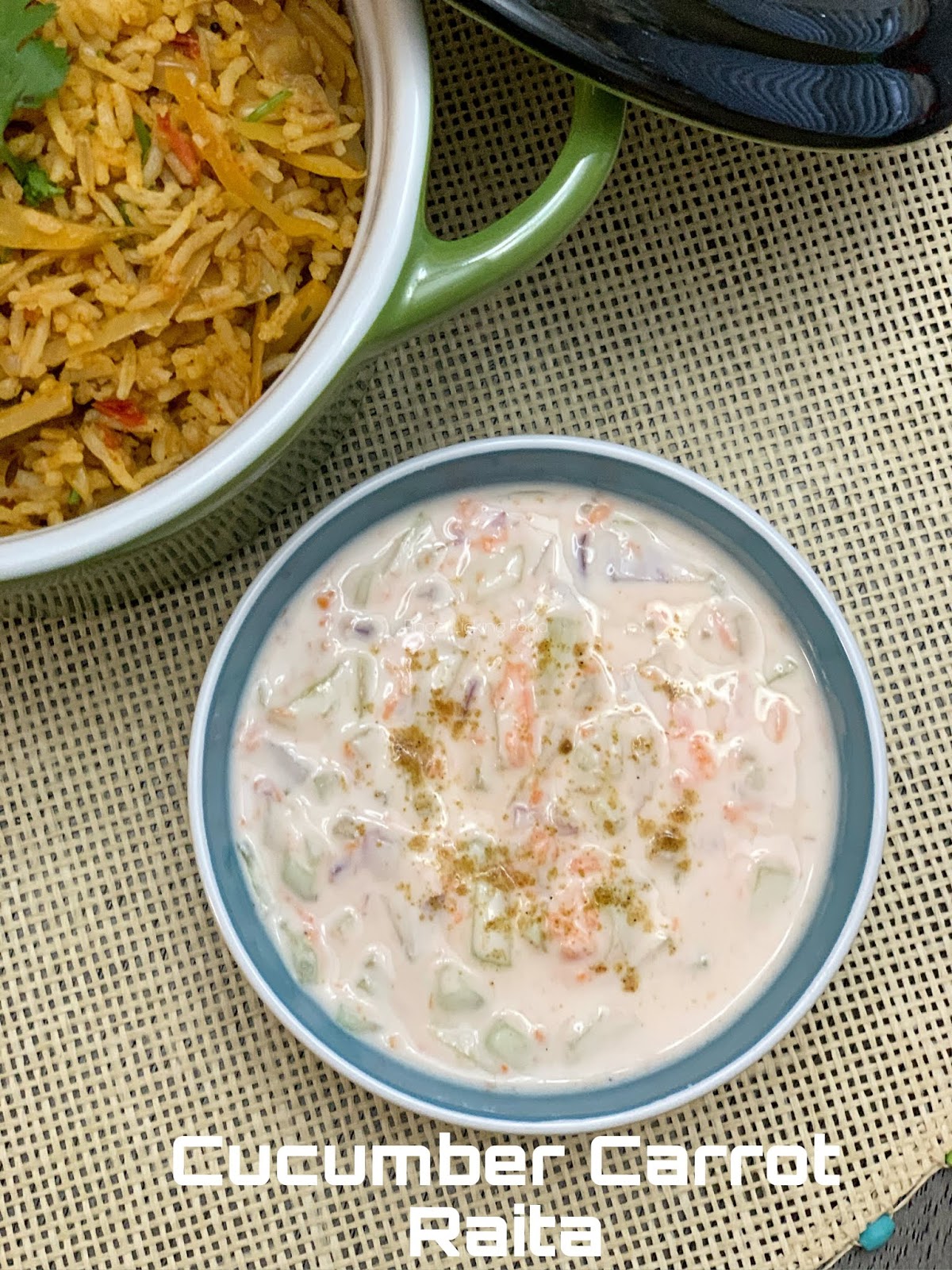
Stir in the shredded cabbage and cook for 4-5 minutes until cooked through. Season with salt to taste. Add the cooked, cooled rice. Combine well. Lastly add the Garam masala. Stir well to combine. Cook for a minute more and turn off heat. Add chopped cilantro. Serve with Cucumber Carrot Raita

Cucumber Carrot Raita: 


You will need:

1 English Cucumber, peeled and finely chopped
1/2 cup grated Carrot
1/4 cup Onion, chopped
Salt to taste
1 cup Yoghurt, lightly beaten
1 tsp Raita Masala (Everest brand)

Combine the above ingredients in a bowl. Chill until ready to use. I very recently discovered Raita Masala, thanks to a friend! This masala completely elevates the taste of any Raita and has become a standard staple in my pantry.

WOYP Day #44 Udupi Style Pundi/ Pundi Gatti


Pundi is native to Mangalorean cuisine, popular in the city of Udupi too. Depending on the way its shaped it is known as Pundi in some places and Pundi Gatti in some others. The dough is first cooked on the stove top and then steam cooked. We make something similar called Bilkudumlu, without onions or tadka. Made with Rice Rava (Akki thari) or Idli Rava, these steamed dumplings are typically round with a dip in the center. I shaped them into round balls and small cylinders too. The cylinders are also called Pundi Gatti, meaning a ‘fistful’. 


You will need:

1.5 cups Rice Rava or Idli Rava
3 cups Water
2 tbsp Oil
1 tsp Cumin seeds
1 tsp Urad Dal
1 tsp Chana Dal
1/2 cup chopped onion
3 dry red chilies, broken into bits
1/2 cup fresh grated Coconut
1.5 tsp Salt

Heat oil in a deep pan. Add the cumin seeds, urad dal and chana dal. Cook for a few seconds and then add the dry chilies. Add the chopped onion and cook until soft. Add the water, salt and coconut. Cover and bring to a boil on high heat. Once the water begins to boil, lower heat, remove lid and slowly add the rice rava/idli rava while stirring continuously. Continue to stir and cook on low heat for 3-4 minutes until all the water is absorbed. Turn off heat and cool slightly.

Shape the Pundi:

Once the mixture is cool enough to handle. Shape the dough by hand. You can make rounds with a dip in the centre, cylinders or balls like in the picture below. My boys were excited to see the assorted shapes :) 


I used Idli plates to steam the Pondi. If you do not have idli plates, you can use a traditional steamer. 


Oil the idli plates, place the shaped pundi and place in a pressure cooker. Steam for 10-12 minutes. Allow cooker to cool before removing the Pundi. Serve hot with  Sambar & Coconut Chutney. 


WOYP Day #40 Tomato Poori with Bottle Gourd and Peas Saagu


Poori and Vegetable Saagu is a standard combination in Karnataka. The usual combination of veggies are potatoes, peas, green beans and carrots. I wanted to try a different combination this time and used Bottle Gourd and Green Peas. Bottle Gourd is a fairly versatile vegetable and takes on flavors well. Almost like Chayote Squash or White Pumpkin. It turned out good and we didn’t quite miss the other veggies :D 


Tomato Poori
You will need:

2 cups Whole wheat flour
1/2 cup Tomato chopped & pureéd
2 tsp Kashmiri Red chili powder
1 tsp Garam masala
1/2 tsp Kasuthi Methi
2 tbsp Olive oil (or vegetable oil)
Salt to taste
Warm water as required

Oil for frying

Combine wheat flour, salt, chili powder and garam masala in a medium bowl. Lightly crush the Kasuthi methi in your palms and add it to the flour. Also add the oil and the prepared tomato puree. Add warm water little at a time to make a soft dough. The dough should not be sticky. I needed about 1 1/4 cups water. Cover the dough and set aside for 20 minutes.

After the dough has rested, knead the dough well until its smooth. Divide the dough into small balls. Using little flour as needed, roll into round discs, about 3”-4” wide. 


Heat oil for frying in a large deep pan. Set on medium heat. Drop a tiny dot sized piece of dough into the hot oil. If it rises to the surface immediately, the oil is ready. If it rises slowly, heat the oil a little longer and check again. Once the oil is ready, slide the rolled dough into the oil. Press lightly with a spatula to allow the poori to puff up. Flip and cook the other side for a few seconds. Remove to a paper towel lined plate. Serve hot with Saagu. 


Bottle Gourd and Peas Saagu:


 You will need:
1 large Bottle Gourd
1 cup Green peas, fresh or frozen
1/2 cup chopped Onion
2 tbsp Oil
1 tsp Mustard seeds
Few curry leaves
Salt to taste

To grind to a paste:

3 tbsp Dalia (Hurgadale)
6 Green chilies
4 pods Garlic
1/4 cup fresh cilantro
6-8 fresh Mint leaves
1/3 cup fresh grated Coconut
1 tsp Garam masala
Water as needed

Wash the bottle gourd. Trim the ends and peel the skin. Slice in half and then into quarters. Remove the seeds and spongy white part on the inside. Cut the remaining into cubes.

Prepare paste using water as needed. Heat oil in a pressure cooker. Add the mustard seeds and curry leaves. Add the onions and sauté until soft. Now add the cubed bottle gourd and peas. Stir and cook for a minute. 


 Add the prepared paste and saute for 2-3 minutes until fragrant. Add the garam masala. Season with salt and add 1.5-2 cups of water, enough to immerse the veggies. Stir to combine. Close the lid and turn heat to high. Place weight on cooker lid and cook for 4 whistles.

Turn off heat and allow cooker to cool for 10-15 minutes before opening the lid. Stir well and serve hot with the Tomato Pooris.

WOYP day #37 Sprouted Green Moong Rasam

Whole Green Moong is chock full of nutrients. Rich in Folate, Magnesium, Vitamin B & Iron, incorporating it into your diet has great health benefits. Sprouted Moong has a high level of anti oxidants which helps prevent several diseases. Moong features on our plates several times a month. Check out some of these great Whole Moong recipes -


Sprouting the beans also makes it easily digestible and enriches the protein content. Sprouted Moong rasam is flavorful and wholesome and a great addition to any meal. 


You will need:

1 cup whole Green Moong
1/2 onion thinly sliced
4 large pods Garlic
1 tbsp Oil
1 tsp Mustard seeds
1/4 tsp Asafoetida (Hing)
Few curry leaves
2 tsp Tamarind pulp (or paste)
1 tbsp Jaggery
Salt to taste

To dry roast & grind to paste:
 
1 tbsp Coriander seeds
2 tsp Cumin seeds
4 whole black peppercorns
1/4 tsp Fenugreek seeds
6 dry red chillies
1 tbsp chopped onions
3 pods Garlic
2 tbsp fresh coconut

Wash whole moong, soak in water overnight of for 8 hours at least. Drain well and place in a colander. Leave overnight in a warm place. The whole moong will sprout. If you want longer sprouts you can allow it to sit for another night taking care to turn the moong once, otherwise there is risk of mold (depending on weather conditions)


Pressure cook sprouted moong, sliced onions and garlic with sufficient water (for 3 whistles)

Dry roast the spices until fragrant. Cool slightly and then blend to a paste with the onions, garlic and coconut. Use little water as needed. 


Heat oil in a pan. Add the mustard seeds, curry leaves and asafoetida. When the mustard splutters, add the prepared paste. Sauté until fragrant, few mins. Then add the boiled moong. Add the tamarind paste and jaggery. Season with salt. Bring to a boil. Lower heat and simmer for 4-5 minutes. Turn off heat. 

 
Serve hot with steamed white rice.

WOYP Day #30 Mysore Pak


Mysore Pak is a popular sweet in Mysuru (formerly Mysore), Karnataka where I hail from. Mysore Pak goes back to the Royal kitchens during the rule of Krishna Raja Wodeyar IV. A royal cook came up with this sweet concoction using gram flour, sugar, generous amounts of ghee and named it “Mysore Pak” for lack of a better name. “Pak” or “paaka” in kannada means the consistency of sugar, which is a critical element while making Mysore Pak.


In Mysuru, there are two types of Mysore Pak. The regular brick-kind of Mysore Pak which is widely sold in every sweet shop. The other kind is the special Mysore Pak oozing in ghee and the melt-in-the-mouth kind. There are some sweet shops that specialize exclusively in this kind of Mysore Pak. The first kind is made with a mix of ghee and oil while the second is made with pure ghee. You can achieve the bee hive kind of look using ghee too, that depends on the sugar consistency.
 
Using ghee elevates the sweet and is an important ingredient. I used home-made ghee to make this and the proof is in the taste..yum! Making Mysore Pak requires some arm strength and patience since the mixture needs to be stirred constantly to get the right consistency and to avoid the bottom from burning. I’ve never been a fan of Mysore Pak, but my older son is! So this attempt was for him and he was mighty pleased :)

Like I mentioned earlier, ghee plays an important role in this dish. Don’t skimp on the ghee if you want melt-in-the-mouth kind of Mysore Pak. The recipe I followed calls for 2 cups but I made do with 1.5 cups and still was able to achieve tasty Mysore Pak. 


You will need:
Adapted from here


1 cup Gram flour (Besan)
2 cups Sugar
3/4 cup Water
1.5  cups Ghee, melted

Silicone Spatula
A good thick-bottomed pan
Metal whisk
8x8” square pan
Parchment cut to fit bottom of square pan


Place parchment into square pan. Set aside.

Warm the ghee. In a medium mixing bowl, combine the gram flour and 3/4 cup of ghee.Use a whisk to make a smooth, lump-free paste. In another pan, combine the water and sugar and place on medium heat. Stir occasionally until the sugar is melted and comes to a rolling boil. Once it begins to boil let the sugar syrup thicken and come to a one string consistency (similar syrup consistency when we make Gulab Jamoons) This takes about 5-6 minutes.

Once the consistency is achieved, pour the gram flour ghee mixture into the sugar syrup and combine with a spatula. Continue stirring on medium heat, after few minutes add 2 tbsp of ghee. Stir and cook until the ghee is absorbed. Continue with the remaining ghee 2 tablespoons at a time, stirring until each addition is absorbed.

Since I had to constantly stir, I couldn’t pause to take pictures unfortunately.

The mixture will begin to thicken after about 20 minutes of stirring. Continue to cook until the mixture further thickens, 5 more minutes. Pour mixture into the parchment lined pan. Smooth the top and set aside to cool completely.

Once cooled, over turn the pan onto a cutting board or plate.Remove parchment.  Cut the Mysore Pak into small rectangles using a sharp knife. Store in a an air-tight container. 


Though I’ve never liked Mysore Pak, I am kinda enjoying eating this home-made version :D Hope you do too! 


WOYP Day #27 Ujju Rotti and Eggplant curry


Ujju Rotti is made with very fine semolina. It is cooked in water to make a soft pliable dough and then rolled into thin flat discs and cooked on a hot tava (pan)It is important to use fine semolina so that it cooks well in the water and makes a smooth dough.

These rottis pair best with a bold, flavorful curry since the rotti itself isn’t spiced. I made a Mint cilantro eggplant curry to go with it and it was a perfect match! 


Ujju Rotti: 

 
You will need: 

2 cups Fine semolina (fine sooji)
1 tsp Salt
1 tbsp Oil
2.5 cups Water

Bring water to a rolling boil. Add the salt and oil. Turn down heat to low and add the semolina in a slow stream while continuously stirring. The semolina will absorb the water almost immediately. Turn off heat. Set aside for 3-4 minutes and knead while still hot. Its a little tricky but wet your hands if needed to handle the hot dough. If its not kneaded while still hot, the rottis will break while rolling. If you have a stand mixer, dump the dough in the bowl, using the dough hook knead for 2-3 minutes. Remove from bowl, knead and set aside for 15 minutes.

Once cooled, divide dough into equal sized balls. Dip each ball in rice flour and using a rolling pin, roll into a thin disc about 9" in diametre. Once cooked they shrink slightly so if you start with a very small circle, the rotti once cooked will be fairly small. 

Heat a pan on medium high. Once hot, roast the rotti. Cook on one side for 25 seconds until you see bubbles rise. Drizzle little oil and flip the rotti. Cook until done. Remove to plate and keep covered until ready to serve.

Mint Cilantro Eggplant curry:

You can use baby eggplants to make this curry, but I used long eggplants since I had these on hand and stuffed them same way I would with baby eggplants. 


You will need:

4 long purple Eggplants or 6-7 small eggplants, washed and patted dry
4 tbsp Oil
1 tsp Mustard seeds
8-10 curry leaves
1 large onion thinly sliced
Salt to taste
2 tsp Tamarind concentrate (or 1/4 cup fresh tamarind pulp)
1 tbsp Jaggery, powdered

To dry roast:
2 tbsp White sesame seeds
2 tbsp Peanuts

To grind to a paste:
2 tbsp Dalia (Hurgadale)
8 large Mint leaves
1/4 cup packed fresh Cilantro
6 cloves Garlic
8-10 Green chillies (adjust to taste)
1/2 cup grated fresh coconut

Dry roast the sesame seeds and peanuts until lightly brown. Cool and grind with mint, cilantro, garlic, green chillies, fresh coconut, water as needed and little salt. Cut the eggplants into 3” long pieces and slit the pieces into 4 leaving the bottom of each pieceintact. Fill a teaspoon or two of ground paste into each eggplant piece. Set aside the remaining paste. 

Heat oil in a pressure cooker. Add the mustard seeds and when it begins to splutter add the curry leaves. Add the sliced onions and sauté until done. Now add the leftover ground paste and fry until fragrant, for 30 seconds or so. Add the tamarind pulp, jaggery and salt as needed. Cook for a minute. Now add the stuffed eggplants and 1-1.5 cups of water enough to submerge the eggplants. 

Combine well and close pressure cooker lid. Allow the pressure to rise. Now place the weight on the lid and turn heat to low. Cook for 9 minutes. Turn off heat and let stand for a few minutes before opening the lid. 


Serve hot with Ujju Rottis.

Blog Widget by LinkWithin